
The landscape of television entertainment has transformed dramatically over the past decade, with television premium services emerging as the dominant force in how audiences consume content. As traditional cable subscriptions decline and streaming platforms proliferate, consumers face an increasingly complex decision about which premium television options deliver the best value. Understanding what defines a premium television experience, the features that distinguish quality services, and how to maximize value has become essential for households seeking comprehensive entertainment solutions without breaking the bank.
What Is Television Premium?
Television premium refers to subscription-based entertainment services that provide access to high-quality content including live channels, on-demand movies, TV series, and exclusive programming, delivered through internet-based streaming technology rather than traditional cable or satellite infrastructure. These services typically offer superior picture quality, multi-device compatibility, extensive content libraries, and advanced features like pause-and-resume functionality, DVR capabilities, and personalized recommendations that distinguish them from basic or free viewing options.
Key Takeaways
- Premium television services have shifted from traditional cable models to flexible, internet-based streaming platforms
- Cost efficiency drives consumer decisions, with many households now spending over $100 monthly on multiple subscriptions
- Content variety remains the primary differentiator, with leading services offering 100,000+ channels and extensive on-demand libraries
- Technology features like anti-freeze streaming, multi-device support, and 4K quality define modern premium experiences
- Hybrid monetization models are reshaping the industry, blending subscription, ad-supported, and pay-per-view options
The Evolution of Television Premium Services
The television industry has undergone a fundamental transformation since 2020, with streaming services capturing an increasingly dominant share of viewing time. According to recent data, U.S. viewers now spend 60% of their TV time on streaming content, surpassing linear television’s 40% share.
This shift reflects changing consumer preferences and technological capabilities. Traditional cable packages offered limited flexibility, requiring viewers to pay for hundreds of channels they never watched. Premium television services emerged as alternatives, promising customized content selections and on-demand accessibility.
Market Dynamics and Growth Patterns
However, the premium streaming market has entered a new maturity phase. Research indicates that premium streamers experienced growth slowdown to just 7% in 2025, a significant decline from previous double-digit expansion rates. This deceleration signals market saturation and increasing competition among providers.
The landscape now features three distinct service categories:
- Subscription-based premium services offering exclusive content without advertisements
- Ad-supported platforms providing free or reduced-cost access with commercial interruptions
- Hybrid models blending subscription fees with limited advertising

Benefits of Television Premium Services
Cost Savings and Value Proposition
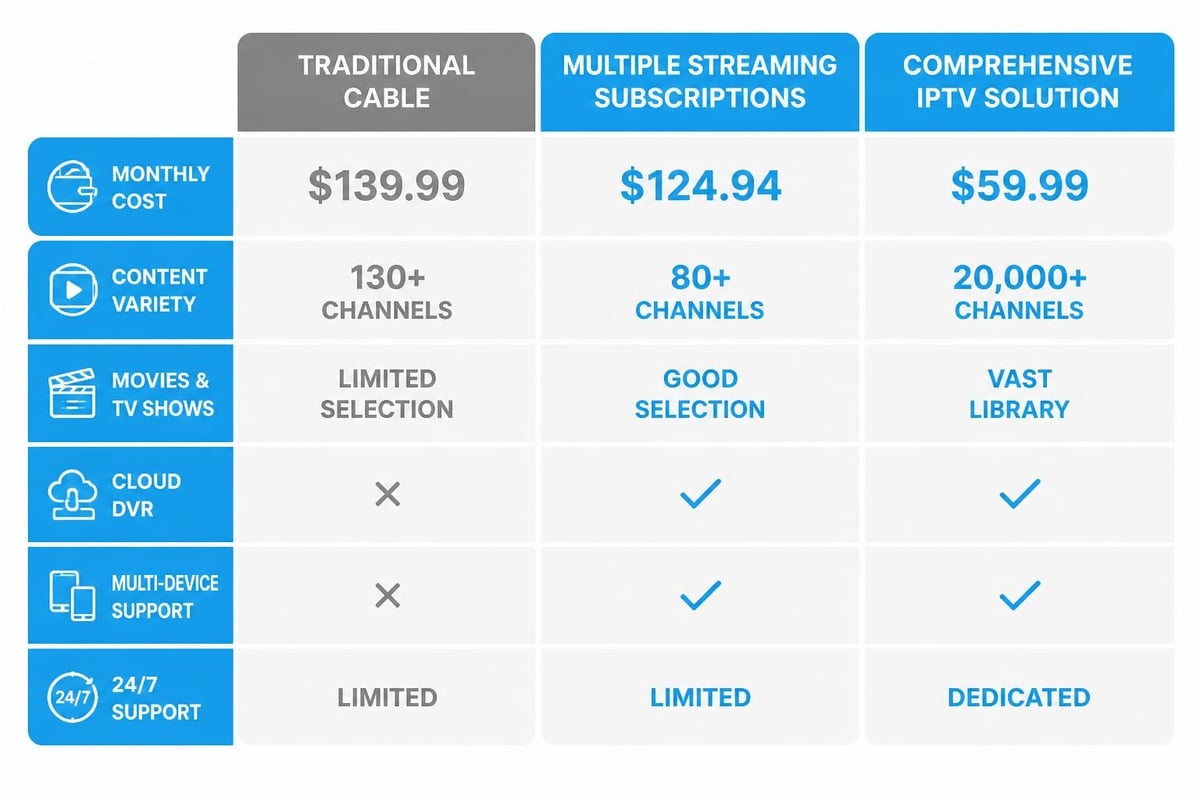
One of the most compelling advantages of modern television premium services involves potential cost reduction compared to traditional cable packages. Many households previously paid $150-200 monthly for cable subscriptions with extensive channel lineups they rarely utilized.
Premium IPTV services have disrupted this model by offering comprehensive content access at significantly reduced costs. The elimination of equipment rental fees, installation charges, and long-term contracts provides additional financial benefits.
| Traditional Cable | Television Premium Services |
|---|---|
| $150-200/month average | $20-80/month typical range |
| Equipment rental fees | No hardware costs |
| 12-24 month contracts | Flexible or one-time payment |
| Limited device access | Multi-device streaming |
| Regional restrictions | Global content access |
Content Variety and Accessibility
Premium television services distinguish themselves through unprecedented content diversity. Leading platforms now provide:
- Live channel access spanning news, sports, entertainment, and international programming
- On-demand libraries featuring hundreds of thousands of movies and TV episodes
- Exclusive original content not available through traditional broadcasters
- International programming including channels from multiple countries and languages
- Niche content catering to specific interests and demographics
This breadth addresses a fundamental consumer frustration with cable television: paying for channels never watched while missing desired content from premium networks.
Technology and User Experience Features
Modern television premium platforms leverage advanced technology to enhance viewing experiences:
- Anti-freeze technology ensuring buffer-free streaming even during high-traffic periods
- Multi-device compatibility allowing seamless viewing across smartphones, tablets, smart TVs, and streaming devices
- Cloud DVR functionality enabling users to record and store favorite programs
- Personalized recommendations using algorithms to suggest relevant content
- 4K and HDR support delivering superior picture quality on compatible displays
Why People Choose Television Premium Over Traditional Cable
Flexibility and Control
The shift toward television premium services reflects fundamental changes in how audiences consume entertainment. Today’s viewers demand control over what they watch, when they watch, and how they access content.
Traditional cable operated on fixed schedules, forcing viewers to adjust their lives around broadcast times. Premium streaming services inverted this relationship, putting audiences in control. This flexibility proves particularly valuable for:
- Busy professionals who work irregular hours
- Families with diverse viewing preferences and schedules
- Cord-cutters seeking to eliminate unnecessary expenses
- International audiences wanting access to home-country content
Elimination of Subscription Fatigue
Interestingly, while the streaming revolution initially promised liberation from cable bundles, many consumers now find themselves managing multiple subscriptions. This phenomenon, termed “streamflation,” has created new challenges as rising costs of streaming subscriptions strain household budgets.
Comprehensive television premium services address this problem by consolidating content from multiple sources into single platforms. Rather than maintaining separate subscriptions for sports, movies, news, and entertainment, users access everything through one interface.
Features to Look for in Television Premium Services
Essential Technical Capabilities
When evaluating television premium options, certain technical features separate quality services from substandard alternatives:
Streaming Quality and Reliability
- Consistent HD or 4K streaming without buffering
- Adaptive bitrate technology adjusting to connection speeds
- Redundant server infrastructure ensuring uptime
- Low latency for live sports and events
Device Compatibility
- Support for major smart TV platforms including Samsung, LG, and Android TV
- Dedicated apps for Amazon Fire Stick, Roku, and Apple TV
- Mobile applications for iOS and Android devices
- Browser-based access for computers
Content Organization
- Intuitive interface with logical categorization
- Robust search functionality
- Electronic Program Guide (EPG) for live channels
- Favorites and watchlist features
Content Library Depth
The value of television premium services correlates directly with content availability. Comprehensive platforms should offer:
- Minimum 50,000+ live channels across categories
- Extensive on-demand movie libraries with recent releases
- Complete TV series collections including current seasons
- Sports packages covering major leagues and events
- International content from multiple countries
For those specifically interested in premium streaming options, platforms like Apollo Group TV Subscription demonstrate how modern IPTV services deliver comprehensive channel lineups and on-demand content through flexible subscription models.
Customer Support and Resources
Quality television premium providers distinguish themselves through superior customer service:
- Setup assistance helping users configure devices and applications
- Troubleshooting support addressing technical issues promptly
- Regular updates maintaining compatibility with evolving devices and platforms
- Documentation and guides enabling self-service problem resolution
- Responsive communication through multiple channels
Common Problems and Solutions with Television Premium
Buffering and Streaming Quality Issues
Problem: Frequent buffering disrupts viewing experiences and frustrates users.
Solutions:
- Verify internet connection speeds meet minimum requirements (25 Mbps for HD, 50 Mbps for 4K)
- Use wired Ethernet connections instead of WiFi when possible
- Close unnecessary applications consuming bandwidth
- Select services with adaptive streaming and anti-freeze technology
- Consider upgrading internet service plans
Device Compatibility Challenges
Problem: Preferred devices may not support certain television premium services.
Solutions:
- Research platform compatibility before subscribing
- Utilize alternative devices like streaming sticks or boxes
- Check for official apps in device app stores
- Contact provider support for configuration assistance
- Consider services with broader device support
Content Discovery Difficulties
Problem: Massive content libraries make finding specific programs challenging.
Solutions:
- Utilize search functions with specific titles or keywords
- Explore category browsing for genre-based discovery
- Create watchlists and favorites for easy access
- Use EPG guides for live channel programming
- Take advantage of recommendation features
Comparing Television Premium Business Models
The television premium industry has evolved beyond simple subscription models. Understanding different monetization approaches helps consumers make informed decisions.
Subscription-Based Services
Pure subscription services charge monthly fees for unlimited access without advertisements. These platforms appeal to viewers prioritizing uninterrupted experiences and exclusive content.
Advantages:
- No commercial interruptions
- Access to premium original programming
- Consistent viewing experience
Disadvantages:
- Higher monthly costs
- Multiple subscriptions create budget strain
- Content may disappear as licensing agreements expire
Ad-Supported Platforms
Research shows that ad-supported platforms now dominate TV viewership, with 72.4% of total TV watching occurring on such services. This model offers free or reduced-cost access in exchange for commercial viewing.
Advantages:
- Lower or zero subscription costs
- Access to substantial content libraries
- No commitment required
Disadvantages:
- Commercial interruptions disrupt viewing
- Limited access to premium content
- Potential privacy concerns from targeted advertising
Hybrid and One-Time Payment Models
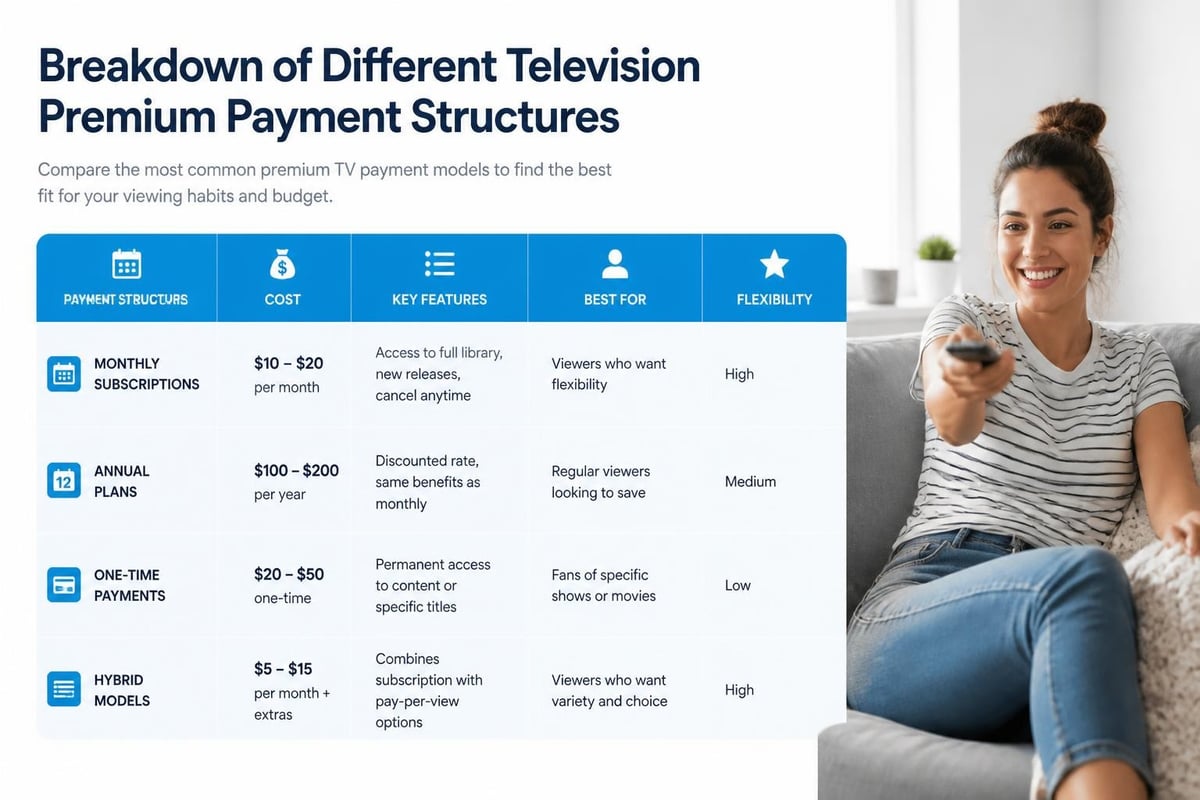
Innovative providers have introduced alternative approaches, including one-time payment options that eliminate recurring subscription fees. These models appeal to consumers seeking long-term cost predictability.
| Model Type | Payment Structure | Typical Cost | Best For |
|---|---|---|---|
| Monthly Subscription | Recurring fee | $15-80/month | Flexible commitment |
| Annual Subscription | Yearly payment | $120-600/year | Long-term users |
| One-Time Payment | Single charge | $200-800 total | Permanent access |
| Ad-Supported | Free or reduced | $0-20/month | Budget-conscious |
The Role of IPTV in Television Premium Services
Internet Protocol Television (IPTV) represents the technical foundation enabling modern television premium experiences. Unlike traditional broadcasting methods, IPTV delivers content through internet protocols, providing unprecedented flexibility and scalability.
Technical Advantages of IPTV
Academic research on IPTV highlights how this technology addresses fundamental limitations of traditional television delivery:
- Bandwidth efficiency through on-demand streaming rather than continuous broadcasting
- Personalization capabilities enabling customized channel lineups and recommendations
- Interactive features including pause, rewind, and record functionality for live content
- Quality scalability adjusting stream quality based on network conditions
- Global accessibility transcending geographic limitations of traditional broadcasting
Content Aggregation Benefits
IPTV platforms excel at aggregating diverse content sources into unified interfaces. This consolidation addresses the fragmentation plaguing the streaming industry, where consumers previously needed separate apps for different networks and studios.
Modern IPTV services combine:
- Major network live feeds
- Cable channel programming
- Premium movie channels
- Sports packages and pay-per-view events
- International broadcasting
- On-demand libraries from multiple studios
Market Trends Shaping Television Premium in 2026
The Rise of FAST Channels
Free Ad-Supported Streaming Television (FAST) channels have experienced explosive growth, with global channel counts spiking 14% from Q1 2025 and 76% since 2023. This trend reflects evolving consumer preferences and industry monetization strategies.
FAST channels offer linear programming similar to traditional television but delivered through streaming platforms with advertising support. They provide middle-ground options for viewers seeking familiar channel-surfing experiences without subscription costs.
Specialty and Niche Services
Analysis reveals that specialty SVOD services are finding success by targeting specific audience segments rather than competing for mainstream subscribers. These platforms focus on:
- Genre-specific content (horror, documentaries, anime)
- Demographic targeting (children’s programming, senior content)
- Interest-based programming (fitness, cooking, DIY)
- Cultural and language-specific offerings
This specialization allows smaller services to build loyal subscriber bases while avoiding direct competition with entertainment giants.
Volatility and Subscriber Churn
Despite market maturation, premium SVOD faces ongoing volatility in subscriber growth and retention. Cancellation rates remain high as consumers rotate between services based on exclusive content releases and promotional pricing.
This churn creates opportunities for comprehensive television premium services offering broad content catalogs that reduce the need for subscription hopping.
Optimizing Your Television Premium Experience
Strategic Subscription Management
Maximizing value from television premium services requires deliberate strategy:
- Audit current subscriptions identifying redundant or underutilized services
- Evaluate content overlap between different platforms
- Consider comprehensive alternatives consolidating multiple subscriptions
- Take advantage of trials testing services before committing
- Monitor usage patterns ensuring subscriptions align with viewing habits
Device Configuration Best Practices
Proper setup ensures optimal performance from television premium services:
- Update devices regularly maintaining latest software versions
- Optimize network settings prioritizing streaming devices in router configurations
- Use quality HDMI cables supporting 4K and HDR when available
- Configure display settings matching content quality to screen capabilities
- Organize apps efficiently placing frequently used services on home screens
Content Discovery Strategies
With hundreds of thousands of titles available, effective content discovery prevents overwhelming choice paralysis:
- Explore curated collections leveraging platform recommendations
- Follow genre categories discovering content within preferred types
- Use advanced search filters narrowing results by year, rating, or language
- Check “new additions” regularly for recently added content
- Create themed watchlists organizing content for different moods or occasions
Future Outlook for Television Premium Services
Industry Consolidation Predictions
The television premium landscape will likely see continued consolidation as platforms compete for subscribers and content rights. Smaller services may merge or partner with larger providers, while hybrid monetization strategies blending subscription, advertising, and transactional models become standard.
Technology Advancements on the Horizon
Emerging technologies promise to enhance television premium experiences:
- Artificial intelligence improving content recommendations and search capabilities
- Virtual reality integration creating immersive viewing environments
- Enhanced interactivity enabling viewer participation in live programming
- Improved compression delivering higher quality at lower bandwidth requirements
- Blockchain integration potentially revolutionizing content rights and micropayments
Regulatory Considerations
As IPTV and streaming services grow, regulatory frameworks continue evolving. Content licensing, geographic restrictions, and net neutrality policies will shape service availability and pricing structures in coming years.
Frequently Asked Questions
What makes a television service “premium”?
Premium television services offer superior content quality, extensive channel selections, on-demand libraries, advanced features like DVR functionality, multi-device streaming, and commercial-free or limited-interruption viewing experiences. They typically require subscriptions rather than providing free access with heavy advertising.
How much should I expect to pay for television premium services?
Pricing varies significantly based on features and content. Traditional premium cable packages cost $150-200 monthly, while individual streaming services range from $10-20 monthly. Comprehensive IPTV solutions may offer one-time payments or monthly subscriptions between $20-80, often providing more content than multiple separate subscriptions combined.
Can I watch television premium services on multiple devices?
Most modern television premium platforms support multi-device streaming, allowing simultaneous viewing on smartphones, tablets, smart TVs, computers, and streaming devices like Fire Stick or Roku. Device limits vary by provider, typically ranging from 2-5 concurrent streams.
What internet speed do I need for television premium streaming?
Minimum requirements depend on desired quality: standard definition needs 3-4 Mbps, HD requires 5-8 Mbps, and 4K streaming demands 25-50 Mbps. Households with multiple simultaneous streams should calculate total bandwidth needs and add 20-30% buffer capacity.
Are television premium services legal?
Legitimate television premium services operating with proper content licensing are completely legal. Consumers should verify providers hold appropriate broadcasting rights and operate transparently with clear terms of service. Established IPTV services maintain proper licensing agreements with content providers.
How do television premium services compare to cable?
Premium streaming services typically offer greater flexibility, lower costs, multi-device access, and on-demand content compared to traditional cable. However, cable may provide better reliability in areas with poor internet infrastructure and sometimes includes services like home phone and internet in bundles.
What happens if my internet connection drops during streaming?
Quality television premium services include buffering and anti-freeze technology that maintains playback during brief connection interruptions. For live content, services typically resume at the current broadcast point when connection restores. Recorded or on-demand content usually resumes where playback stopped.
Can I record shows with television premium services?
Many television premium platforms include cloud DVR functionality allowing users to record live programming for later viewing. Storage capacity and retention periods vary by service, typically ranging from 50-500 hours of recording space with 30-90 day storage limits.
Do television premium services offer local channels?
Availability of local broadcast channels varies by service and region. Some IPTV providers include local network affiliates, while others focus on cable channels and national programming. Users requiring specific local channels should verify availability before subscribing.
How do I cancel television premium subscriptions?
Cancellation processes vary by provider but typically involve account settings or customer service contact. Quality services offer straightforward cancellation without retention pressure or hidden fees. Users should review cancellation policies and any minimum commitment periods before subscribing.
Will television premium replace traditional cable completely?
Industry trends suggest continued migration toward streaming and IPTV services, though complete replacement remains unlikely in the immediate future. Cable maintains advantages in certain markets and demographics, but its market share continues declining as streaming technology improves and content availability expands.
What content types are available on television premium platforms?
Comprehensive services offer live channels across news, sports, entertainment, and international categories; extensive on-demand movie libraries; complete TV series collections; pay-per-view events; documentary programming; children’s content; and specialty channels serving niche interests. Leading platforms provide 100,000+ channels and 250,000+ on-demand titles.
The television premium landscape in 2026 offers consumers unprecedented choice, flexibility, and value compared to traditional cable television. By understanding available service types, essential features, and strategic subscription management, households can optimize their entertainment experiences while controlling costs. Apollo Group TV delivers comprehensive solutions addressing these needs through extensive channel access, advanced streaming technology, and flexible payment options that eliminate the burden of managing multiple subscriptions while providing superior content variety and viewing experiences.